
Media source sheet · Updated Sept. 9, 2026
Christina Langdon
Keynote speaker and organizational leadership strategist. She helps leadership teams close the gap between the future they say they want and the future they can actually see.
Nearly two decades at Martha Stewart Living Omnimedia, then chief revenue officer of Fast Company.
Speaks on
Why capable companies lose sight of the future · the leadership capability AI can't replace · why pressure makes smart leaders think smaller · why working harder won't close the Vision Gap
Interviews and bookings
What can she speak to?
Her lead angle
Why status meetings train a company to repeat itself
Most leadership meetings are built around what happened, what's due, what's wrong and what needs fixing. Langdon argues that rhythm trains leaders to become exceptional managers of the present and leaves little room to imagine the future. If companies want innovation and growth, why are so few leadership conversations designed around what doesn't exist yet?
Imagination as a leadership capability
Leaders who spend their days managing the present get very good at it, and the future goes unattended. Langdon defines leadership imagination as a skill to build and practice: seeing beyond current circumstances, questioning what others accept as fixed, picturing what doesn't yet exist.
The growth problem is a vision problem
When growth stalls, leaders push harder on execution. That keeps them focused on the business they have rather than the one they could build. Langdon asks: if you had to grow this business by 500%, what would have to change?
Leading when pressure is the condition
Pressure is not an event a leader waits out. It is the condition every executive now works under, and managing it narrows thinking. The question she puts to leaders inside it: if this were a good thing, what is it here to make possible?
On deadline this quarter
Three running stories she will react to on a reporter's timeline.
Leadership teams are built to improve, not to imagine
Langdon's own assessment data puts 55% of leaders in what she calls the Builder zone: excellent at improving what exists, rarely tasked with designing what comes next. She argues that distribution, not talent, is what caps a company's growth.
AI is rewriting what executives think their job is
Leaders are automating execution, the very capability many were promoted for. As AI absorbs more of what leaders do, Langdon argues their value will rest on what technology can't decide: which future is worth building.
What boards look for in the next chief executive
Boards keep replacing operators with operators. Langdon argues the vacancy is imagination, not operating rigor.
What does she deliver?
Two keynotes, both built for general sessions, leadership conferences, executive offsites and annual meetings. Each adapts to a workshop format.
Signature keynote
Beyond Pressure
Why your organization can't outgrow a future it can't see.
A company can only grow as far as its collective vision. Langdon's argument is that most organizations are held back not by the quality of their people but by the size of the future those people can see. Her research puts three in four teams in that position: operating from past success rather than a shared future.
The session moves a room from diagnosis to method. It opens with pressure as a signal rather than an enemy and uses her Future-Self Index to show a team where it sits. It closes with the Future-Back Method, five steps for building a future deliberately, together.
Audience walks out able to
Name their own Vision Gap, read their team's operating distribution, and run the first Future-Back cycle without her in the room.
Built for
Chief executives and executive teams, chief human resources and learning officers, association conference programs.
Second keynote
What Most People Get Wrong About Innovation
Lessons on innovative leadership learned from Martha Stewart.
Langdon spent nearly two decades inside Martha Stewart Living Omnimedia through reinvention, disruption, legal crisis, public scrutiny, financial pressure and comeback. This keynote takes audiences behind the scenes of that period and argues that what looked like creative instinct was a leadership operating system.
Her thesis: under pressure, capable leaders start confusing being practical with playing it safe, and practical becomes fear dressed up as discipline.
The seven lessons
- 1Taste is strategy.
- 2Ordinary is not the opposite of extraordinary.
- 3No is not the end. It is information.
- 4Constraints can become containers.
- 5The leader is the atmosphere.
- 6Make it beautiful, useful and buyable.
- 7It's a good thing.
What audiences and organizers say
One of the best sessions I've ever attended. So meaningful, rich, and actionable. I'm inspired and rethinking everything.
Christina had us at hello. We walked away knowing what needed to get done to create what we need to grow.
Inspiring, exciting. I didn't want to look away or let my thoughts drift. This session was absolutely extraordinary.
What will she say?
Lines she stands behind, available for direct quotation. Copying a quote takes the attribution with it.
Imagination is not a personality trait. It is a leadership capability, and a leadership team can be held accountable for it like any other.
Pressure is not an event you wait out anymore. It is the condition. And managing it makes you smaller.
I ask chief executives one question: if you had to grow this business by 500%, what would have to change? The answer is never work harder.
Most organizations are well managed and under-imagined. They are executing beautifully and creating slowly.
What is the Vision Gap?
The distance between the future a company says it wants and the future its leaders can actually see.
It is Langdon's name for the problem, and it is a diagnosis rather than a program. Capable companies stall. Effort goes up, growth does not, and the leadership team concludes it needs to work harder or hire differently. Langdon argues the problem sits upstream of both. Pressure widens the gap, since managing pressure narrows thinking and rewards execution over imagination.
7 in 10
High achievers cannot clearly envision their own future.
3 in 4
Teams operate from past success rather than a shared future vision.
Source: Christina Langdon's leadership research.
The Leadership Operating Curve
Langdon's assessment sorts leaders into three operating zones. Langdon's argument is that the Vision Gap is a distribution problem, not a talent problem.
Soldier
22%
Optimizes yesterday. Execute, protect, prove.
Past focus
Builder
55%
Improves today. Stretch, scale, achieve.
Present focus
Creator
23%
Designs tomorrow. Envision, experiment, expand.
Future focus
Questions to ask Christina
Where the conversation gets interesting.
- 1Your data puts 55% of leaders in the Builder zone. Why is that a problem if they are performing?
- 2What does pressure do to the way executives think and make decisions?
- 3If AI automates more of execution, what becomes a leader's most valuable job?
- 4Why do you ask leadership teams how they would grow their business by 500%?
- 5What are companies doing every day that trains their people to think about the past instead of the future?
- 6How does a leader know when being practical has become a constraint?
Two more terms recur across her keynotes and advisory work. The Future-Back Method is her five-step process for building a future backward from possibility. The Compound Vision Effect is what happens when a whole team can see it. Ask her to define either.
Why is she credible on it?
Christina Langdon advises chief executives and leadership teams on a problem she knows from the inside. She spent decades inside some of America's most recognized media brands. She calls it the Vision Gap. Under pressure, that gap widens. Leaders retreat to what they know: execution, efficiency and the operating models that created today's success.
She developed this point of view inside the pressure. Langdon spent nearly two decades at Martha Stewart Living Omnimedia, rising through six roles and helping launch marthastewart.com, MARTHA TV and four magazines. Those were years of extraordinary growth, disruption, scrutiny and reinvention. She later served as chief revenue officer of Fast Company.
She founded her speaking and executive advisory practice in 2019, holds a BA in communications from the University of Delaware and is the author of For Success Sake! She is a survivor of acute myeloid leukemia. She was named one of the 100 Women to KNOW in America, Class of 2025.
On stage this fall
Mondelez International. Further fall engagements are on the calendar and can be confirmed through the media contact.
By the numbers
$1B+
Revenue generated
$80M+
Capital raised
23
Media brands launched
9
Consecutive quarters of growth
266%
Growth in four years
3
Company exits
Selected record
| Role | Organization | Years |
|---|---|---|
| Founder and chief executive | Christina Langdon High Performance Coaching & Consulting, LLC | 2019 to present |
| Chief revenue officer | Fast Company | 2016 to 2018 |
| Six roles, marketing manager through senior vice president and publisher, Everyday Food and Whole Living | Martha Stewart Living Omnimedia | 1993 to 2012 |
| Manager, corporate marketing | Time Inc. | 1991 to 1993 |
| Senior account executive | Burson-Marsteller | 1987 to 1991 |
Education and certification
| Credential | Awarding body | Year |
|---|---|---|
| BA, communications | University of Delaware | 1987 |
| EQ-i 2.0 and EQ 360 certified | Multi-Health Systems |
Press photography and reel
Six selects, one per situation. Click any image to download it. All are cleared for editorial use, and print-resolution originals are available from the media contact.
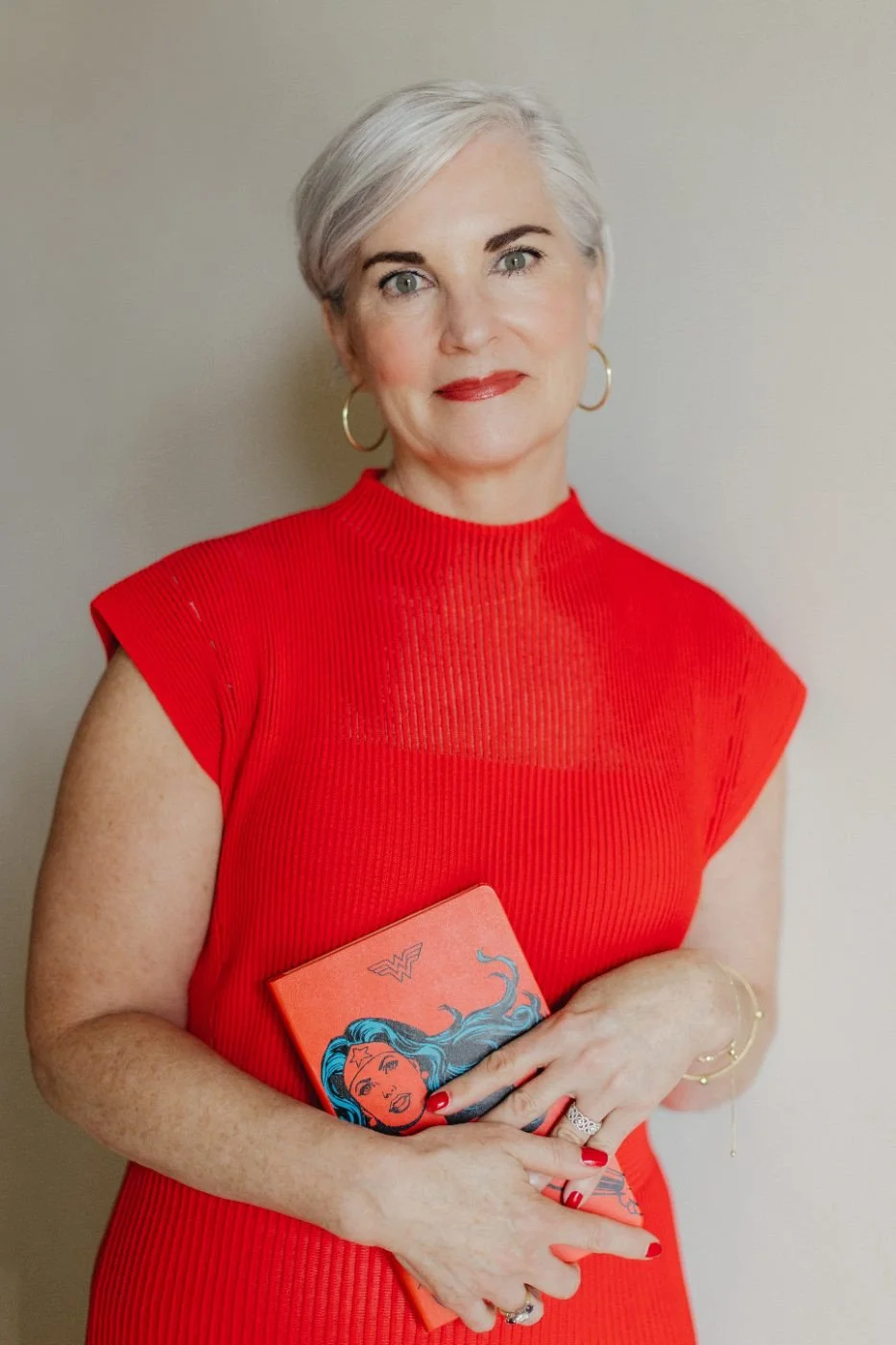
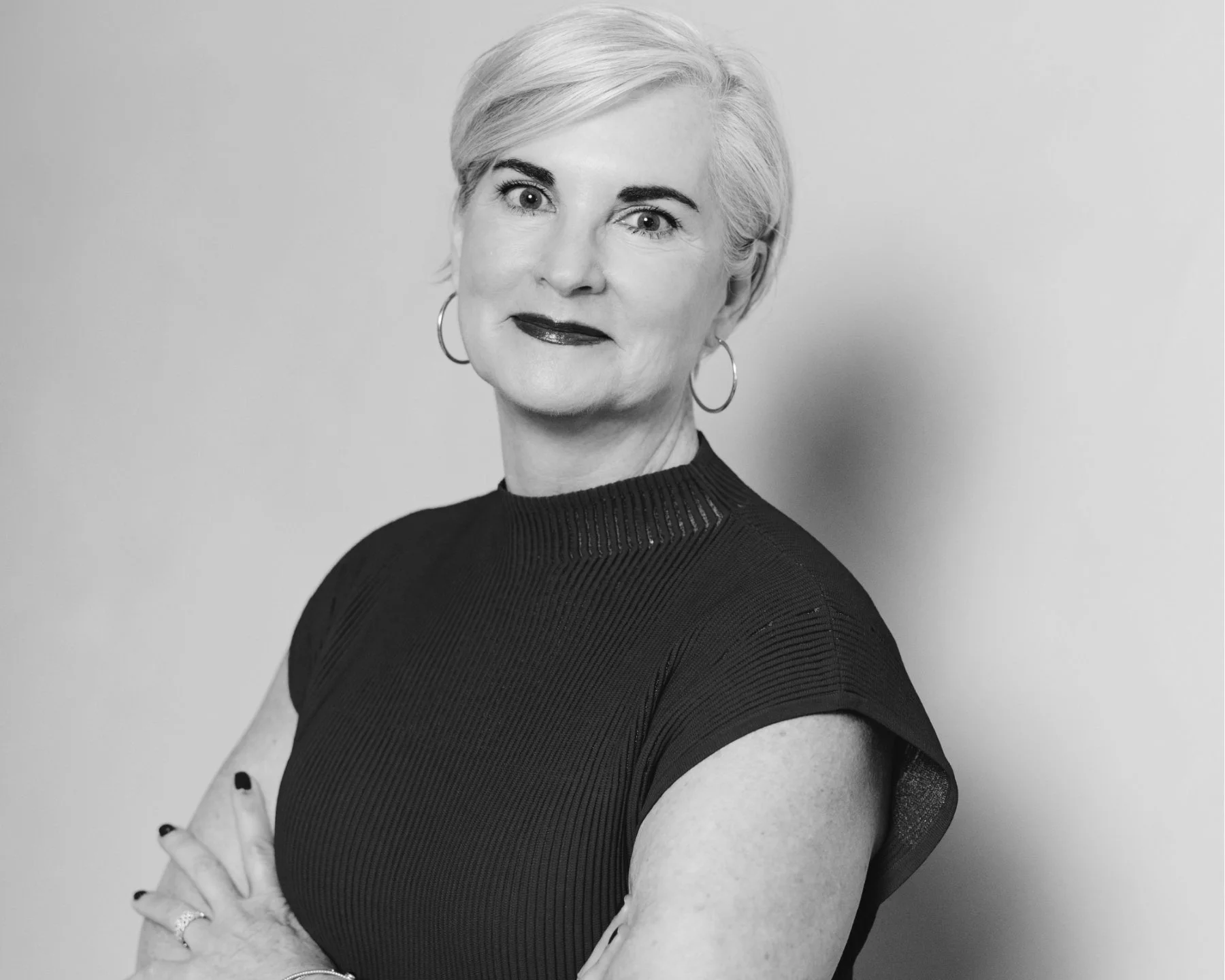 Studio headshotPrimary press portrait
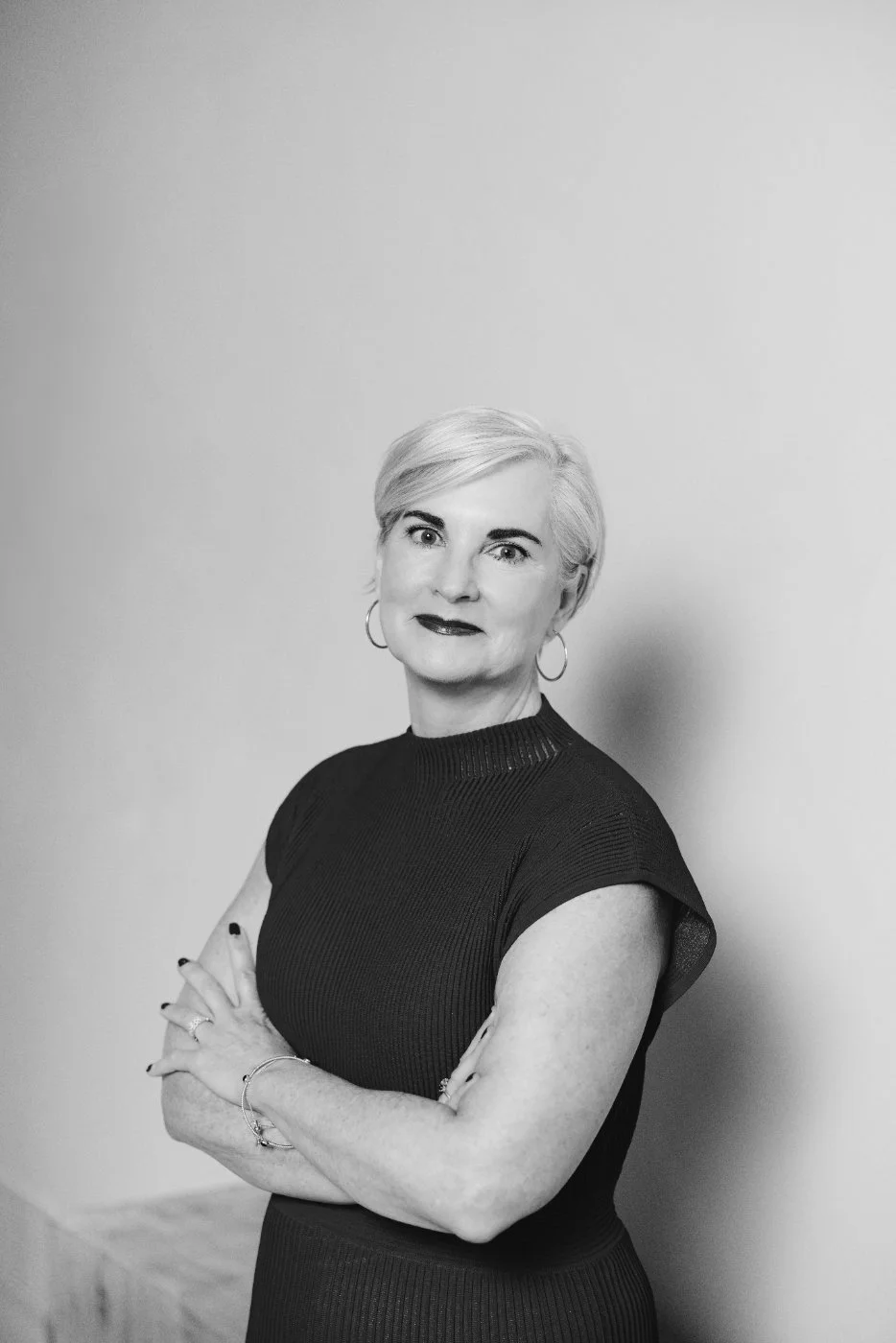 Studio headshot, verticalFor column and profile crops
 Editorial portraitFull length, in color
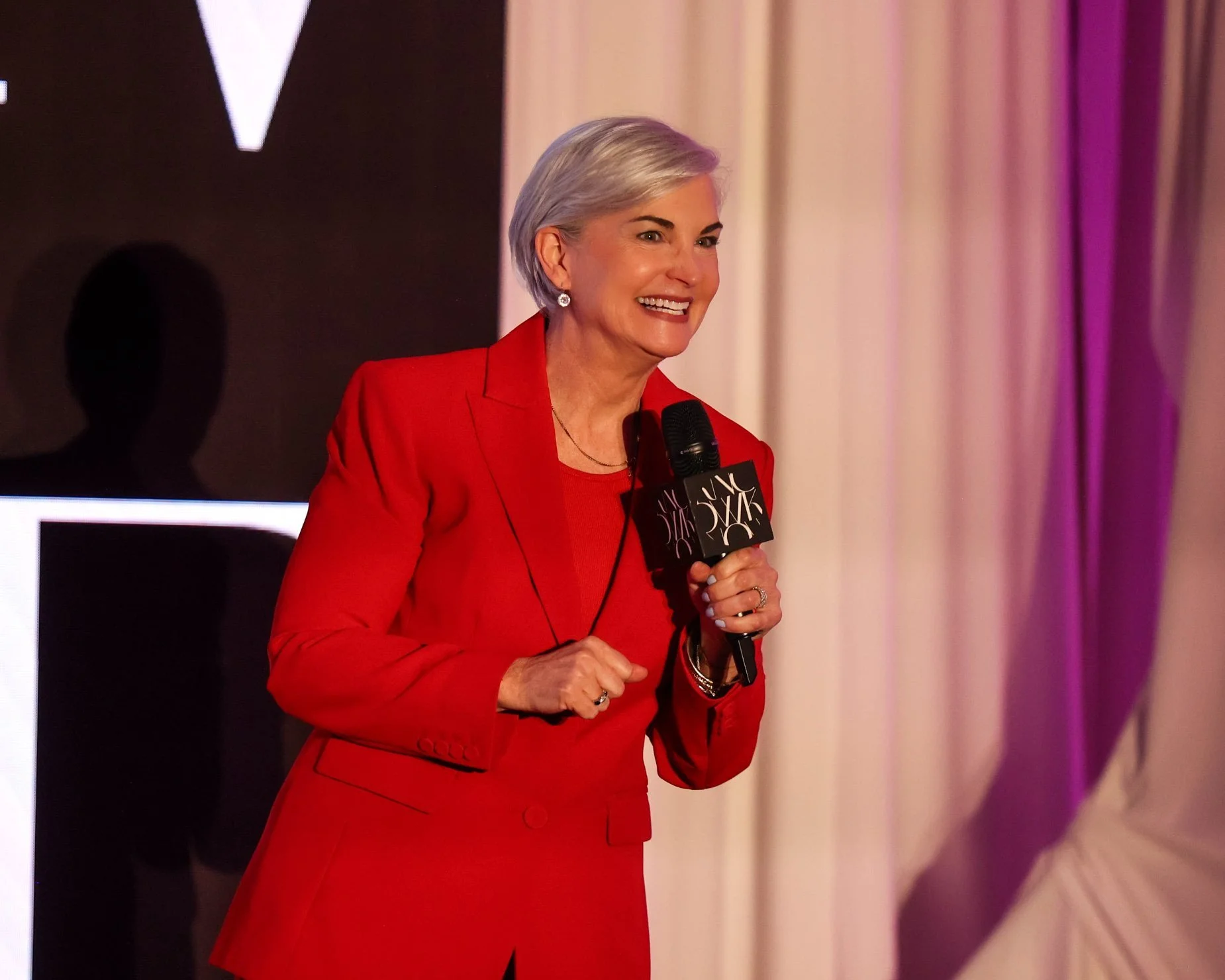
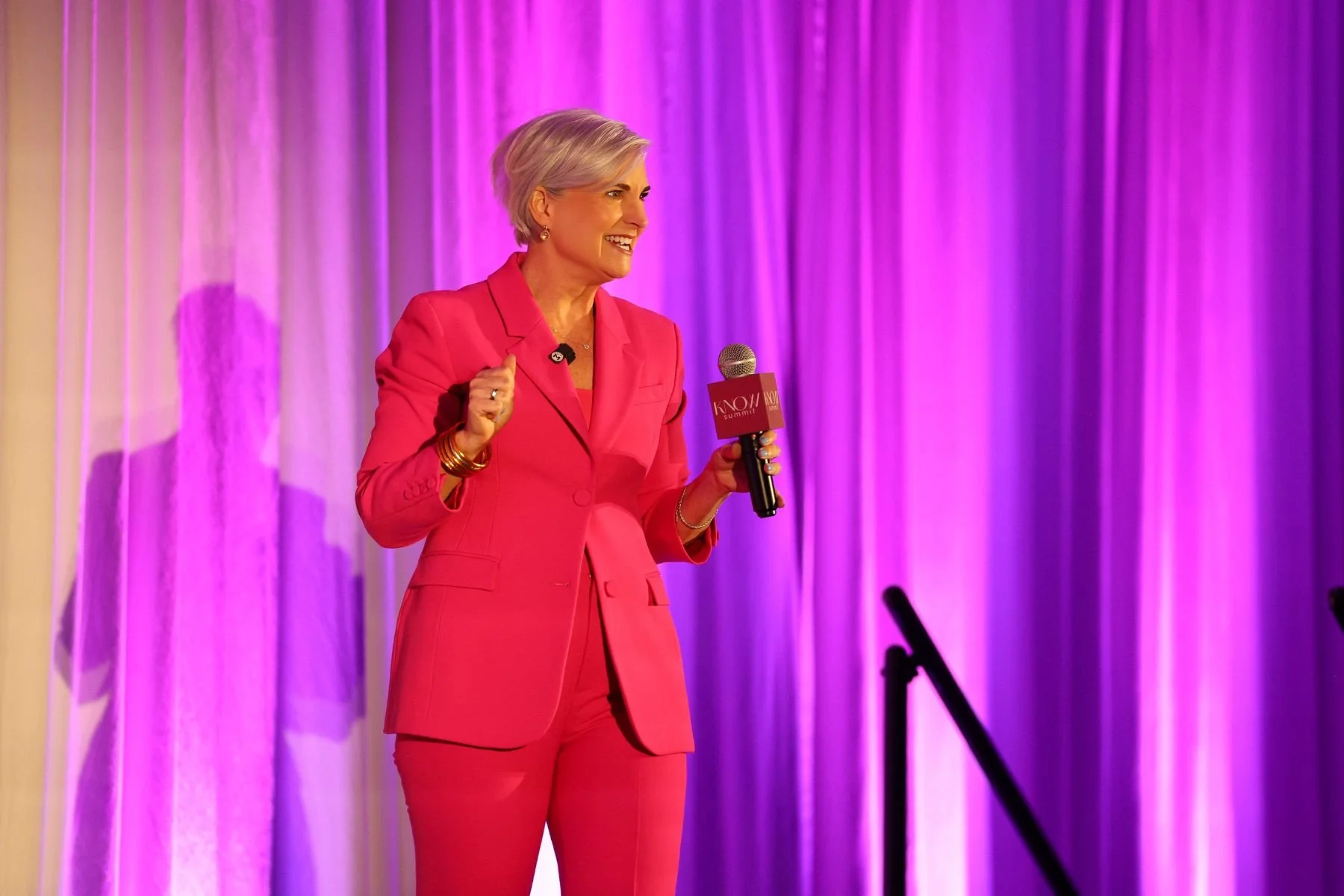 On stage, mid-keynoteKNOW Summit
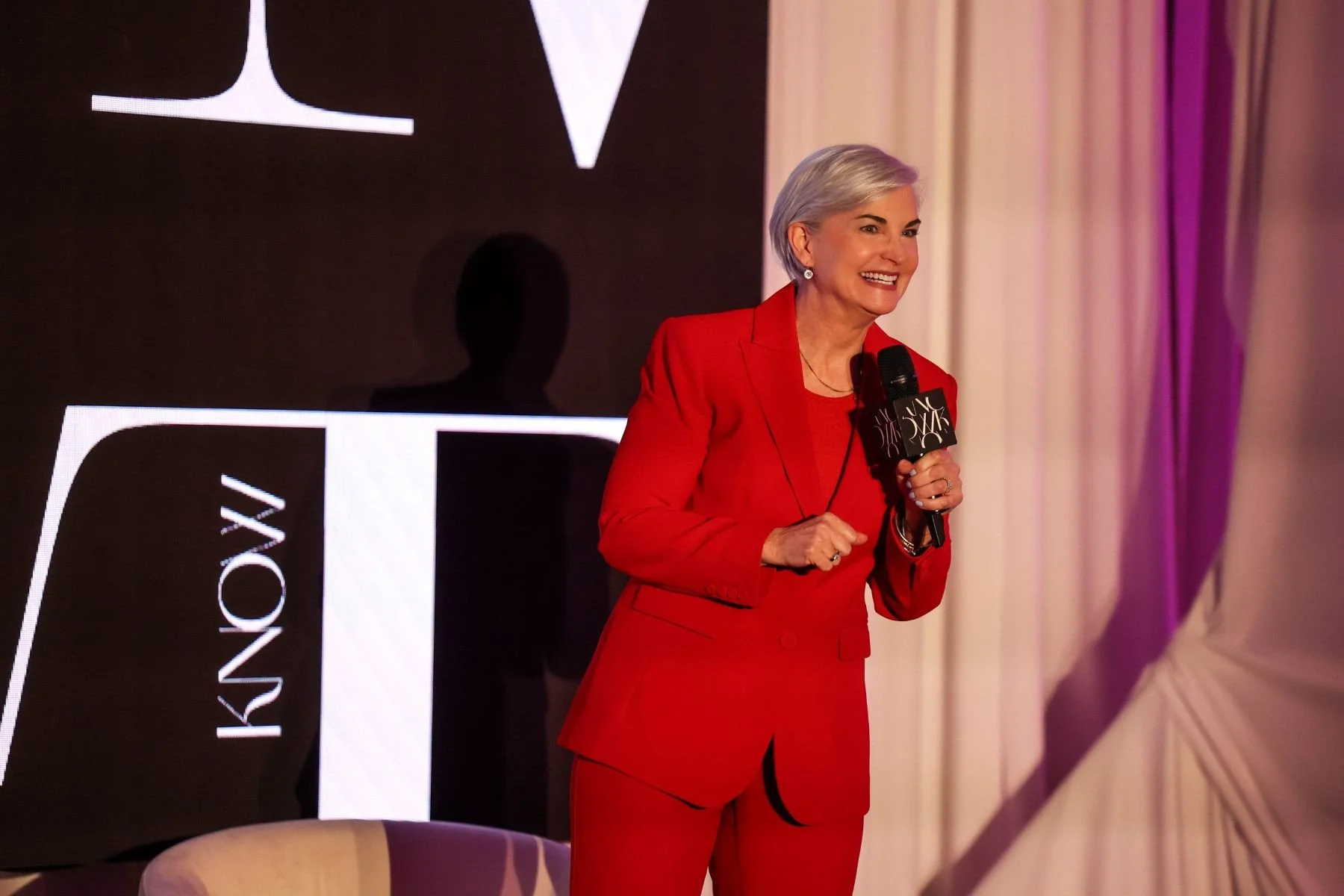 On stage, dark groundReverses well in print
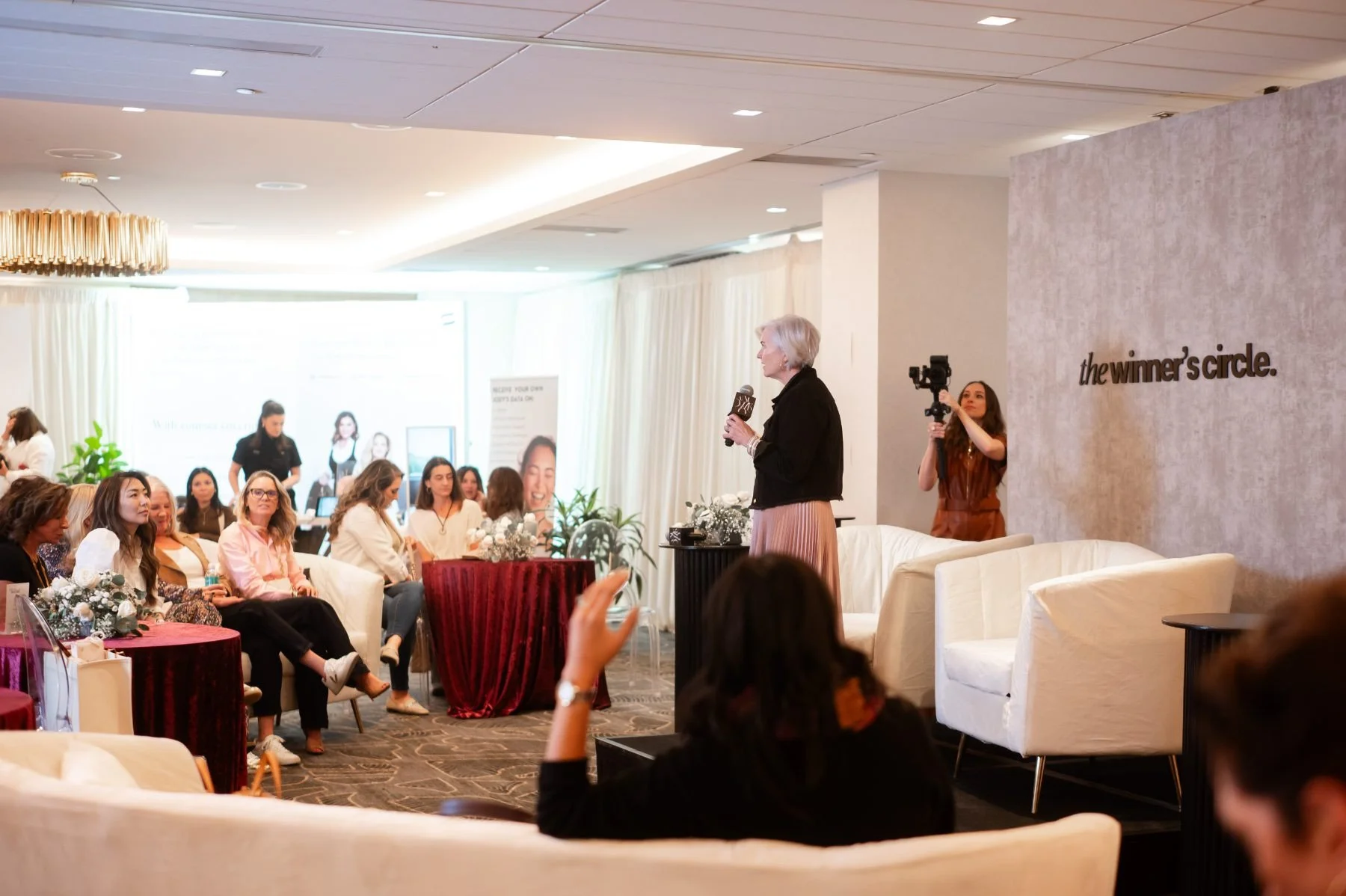
- With an audienceRoom and scale
Speaker reel
Bios, boilerplate and contact
Approved bios
Cleared for use as written, at three lengths.
25 words
Christina Langdon is a keynote speaker and organizational leadership strategist who challenges leadership teams to stop optimizing the present and start imagining what the future requires.
50 words
Christina Langdon is a keynote speaker and organizational leadership strategist who challenges leadership teams to stop optimizing the present and start imagining what the future requires. She spent nearly two decades at Martha Stewart Living Omnimedia and was chief revenue officer of Fast Company. She calls the problem the Vision Gap.
100 words
Christina Langdon is a keynote speaker and organizational leadership strategist who challenges leadership teams to stop optimizing the present and start imagining what the future requires. She spent nearly two decades at Martha Stewart Living Omnimedia, rising through six roles and helping launch marthastewart.com, MARTHA TV and four magazines. She later served as chief revenue officer of Fast Company. Langdon is the founder of the Future-Self Index, an assessment of how leaders and teams see the future. She calls the distance between the future a company wants and the future its leaders can see the Vision Gap.
Paste ready boilerplate
Christina Langdon, keynote speaker and organizational leadership strategist. Christina Langdon is a keynote speaker and organizational leadership strategist who challenges leadership teams to stop optimizing the present and start imagining what the future requires. She spent nearly two decades at Martha Stewart Living Omnimedia and was chief revenue officer of Fast Company. She calls the problem the Vision Gap. Media contact: Kyle Ankney, kyle@kyleankney.com, (954) 292-1845.
Media contact
Kyle Ankney, fractional PR strategist. All interview requests, dates and materials route through here. Langdon is Eastern time and reachable from 6 a.m.
Kyle Ankney, fractional PR strategist. kyle@kyleankney.com. (954) 292-1845.
Working with her
She began her career in public relations at Burson-Marsteller, on the DuPont and General Electric accounts. She knows what a deadline is and what a source owes a reporter. Open to travel.
Topics she does not take
Legal, financial and education.
Elsewhere
Save as PDF
The one sheet fits a single page: name, topics, keynotes, research and contact. The full sheet is every section.